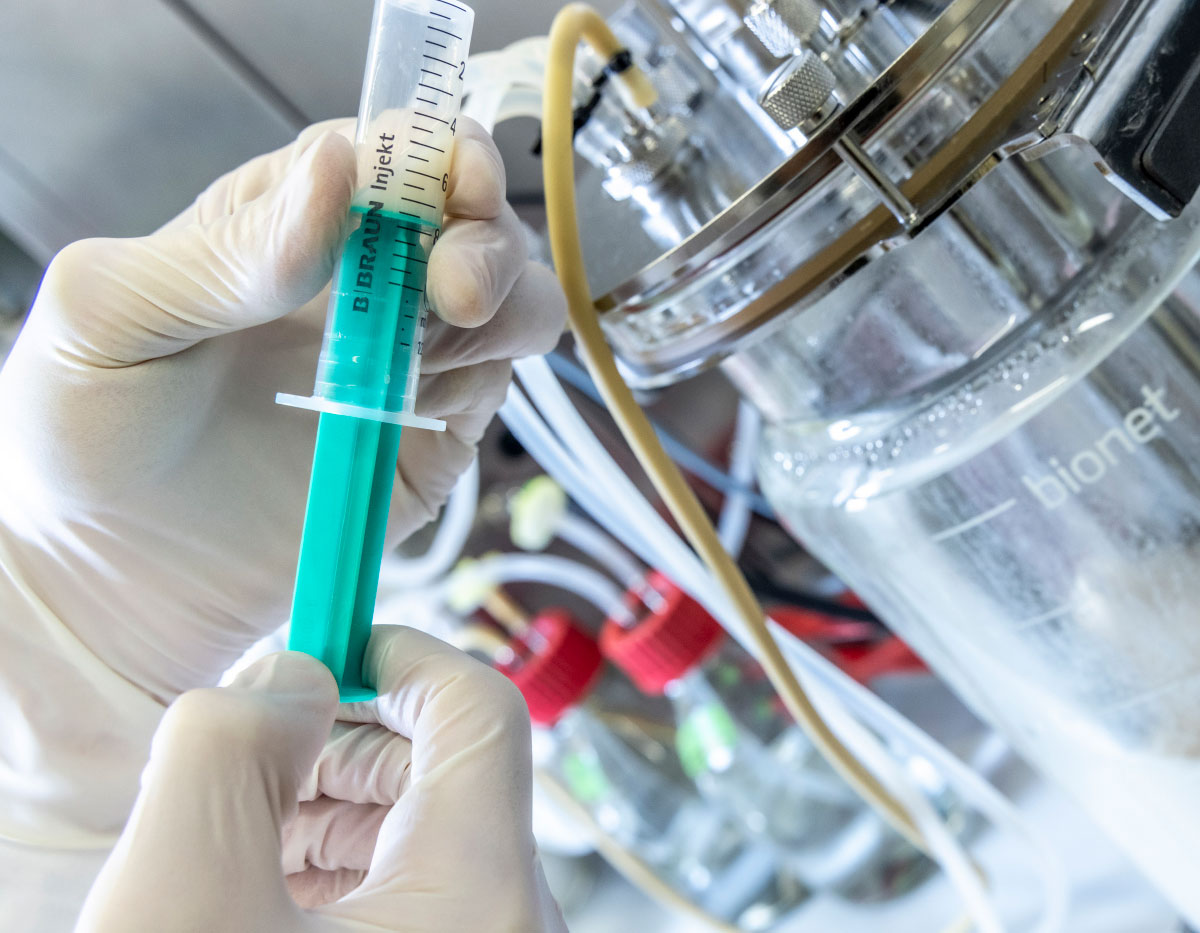
Bioreactor cultivation is the next step after shake flask studies when higher protein yields and tighter process control are required. Operating under controlled conditions for parameters such as pH, dissolved oxygen, temperature, and feeding strategy, bioreactors enable efficient optimization of recombinant protein production and provide process data relevant for further scale-up.
Compared to shake flask cultivation, protein titres achieved in bioreactors are typically significantly higher, often increasing by five-fold or more. Combined with the larger cultivation volume, this results in a substantial increase in overall protein yield. A single 3 L bioreactor run can frequently produce as much recombinant protein as approximately 50 cultivations in 1 L shake flasks, benefiting from both a roughly ten-fold larger cultivation volume and significantly higher expression levels.
Our bioreactor protein production service is designed to generate larger quantities of recombinant protein while providing valuable information on process performance, process robustness, and scalability. We offer lab-scale bioreactor cultivations with 2.5-3.0 L working volume, enabling the production of larger quantities of recombinant protein for characterization, application testing, and process development. Larger cultivation volumes (>5 L) are available on request for projects requiring increased material supply or advanced scale-up studies.